Re-Leased is a property management platform that helps property managers and landlords manage leases, tenants, and financial workflows in one system
Core team
1 Product Manager/Designer, 4 Engineers, 1 Quality Assurance Engineer
My role
Discovery, product strategy, product definition, feature prioritisation, stakeholder alignment, UX/UI, interaction design, design system
Tools
Figma, V0
Problem
Tenants had no easy way to self-serve basic tenancy tasks. Simple requests such as logging maintenance, accessing documents, or querying invoices still required calls, emails, or messages to property managers. As a result, property managers were acting as intermediaries for repetitive requests, causing their already large workload to grow.
Adoption of the existing tenant app was also limited as tenants were required to download and install an app, creating a barrier for some.
Goal
Design a web-based tenant portal that enabled tenants to self-serve common tasks with confidence, reduced administrative load for property managers, and delivered a focused MVP without regressing on existing app functionality.
Impact
- Shipped a web-based tenant portal MVP to internal beta
- Created a foundation to support up to ~250k tenants
- Reduced reliance on property managers for basic tenant requests
- Opened a new surface area for future tenant-facing products
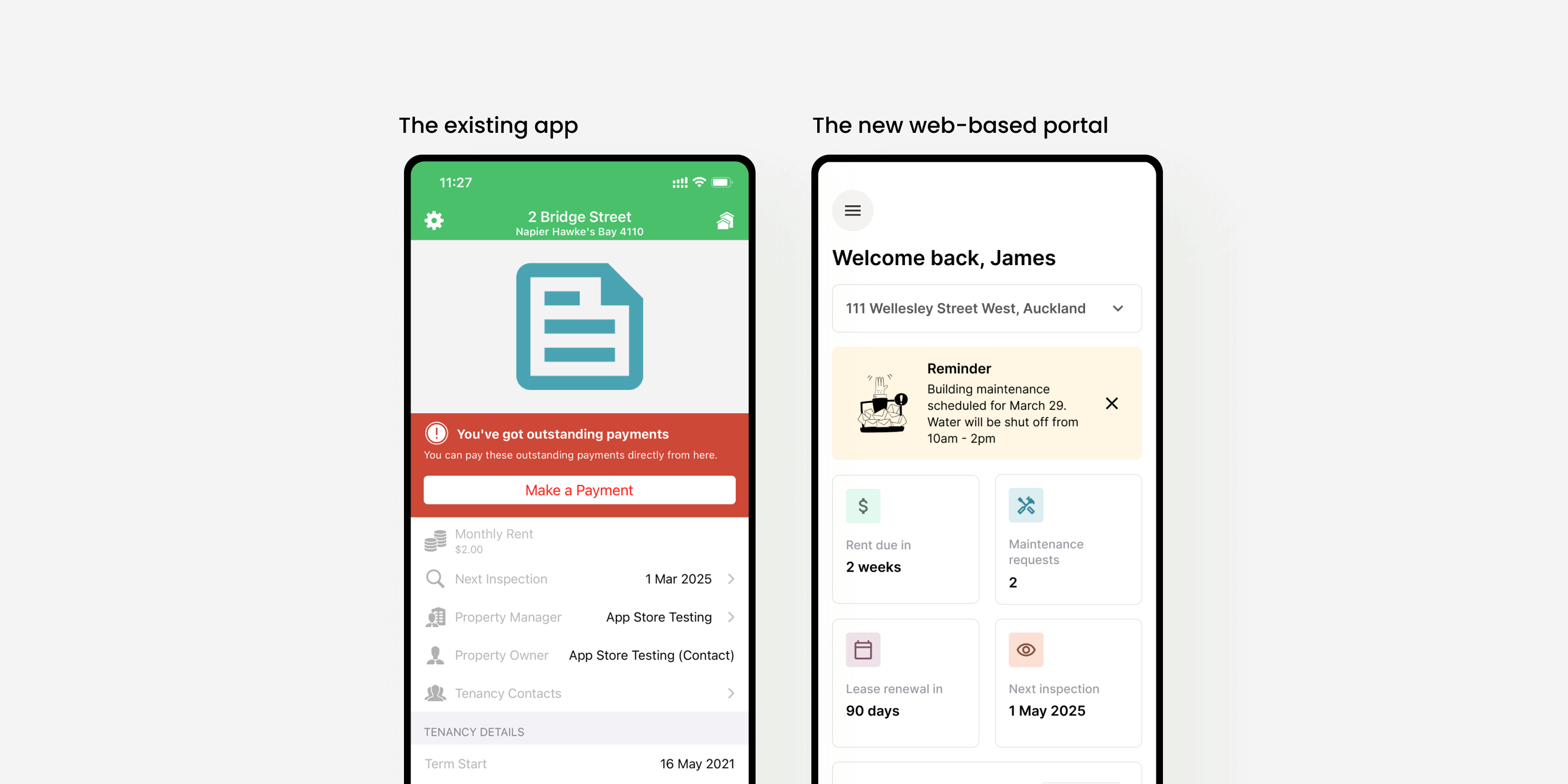
The approach
Understanding real tenant and property manager needs
Discovery focused on understanding where tenancy interactions were breaking down. Customer interviews with property managers showed that the majority of tenant interactions fell into two core tasks: paying rent and logging maintenance requests, followed closely by tracking the status of those requests.
A secondary set of requests related to tenancy clarity, questions about lease terms, documents, and responsibilities. These were typically handled manually by property managers, but could be reduced by making lease information easily accessible within the portal.
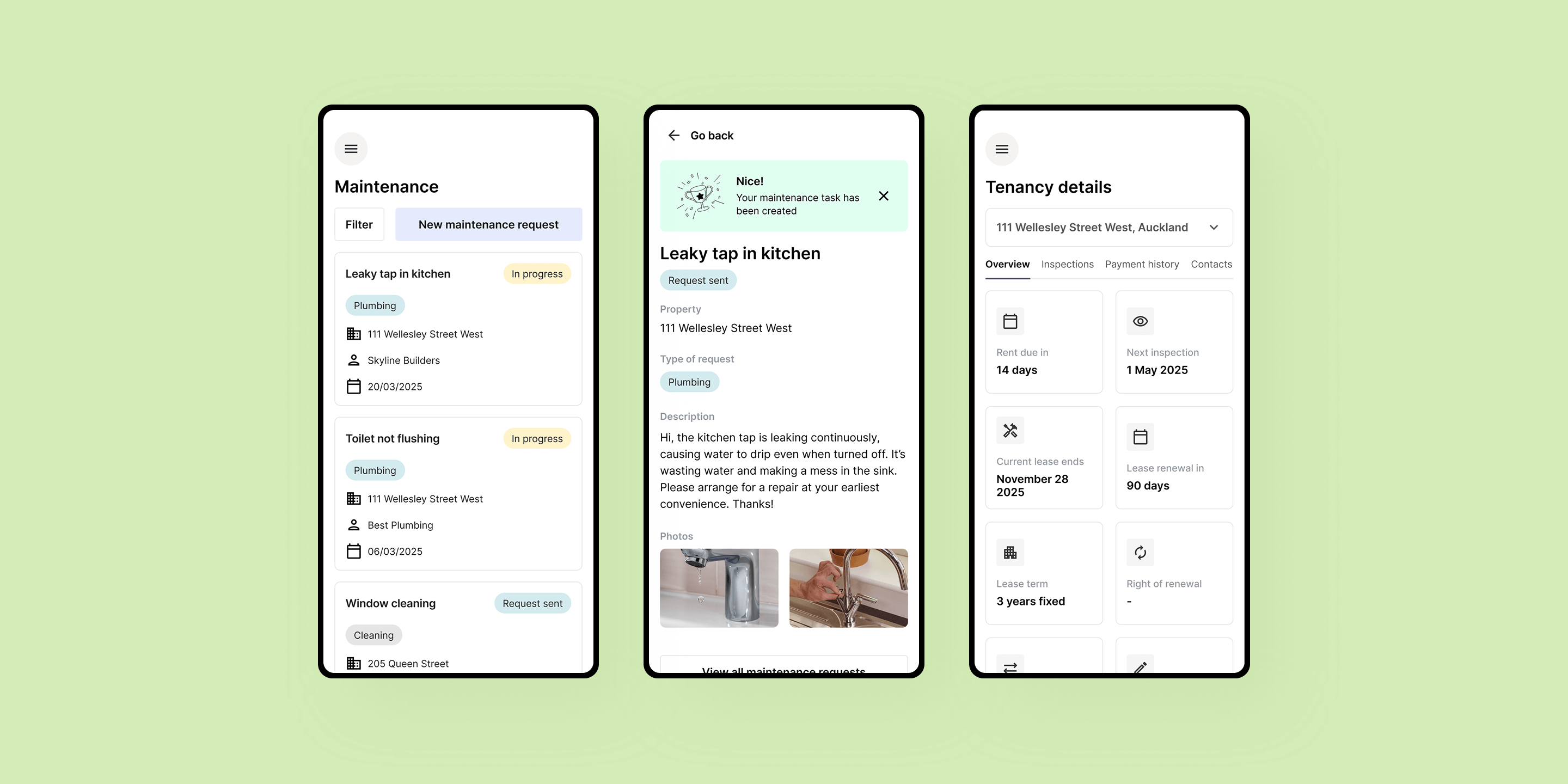
Defining the MVP
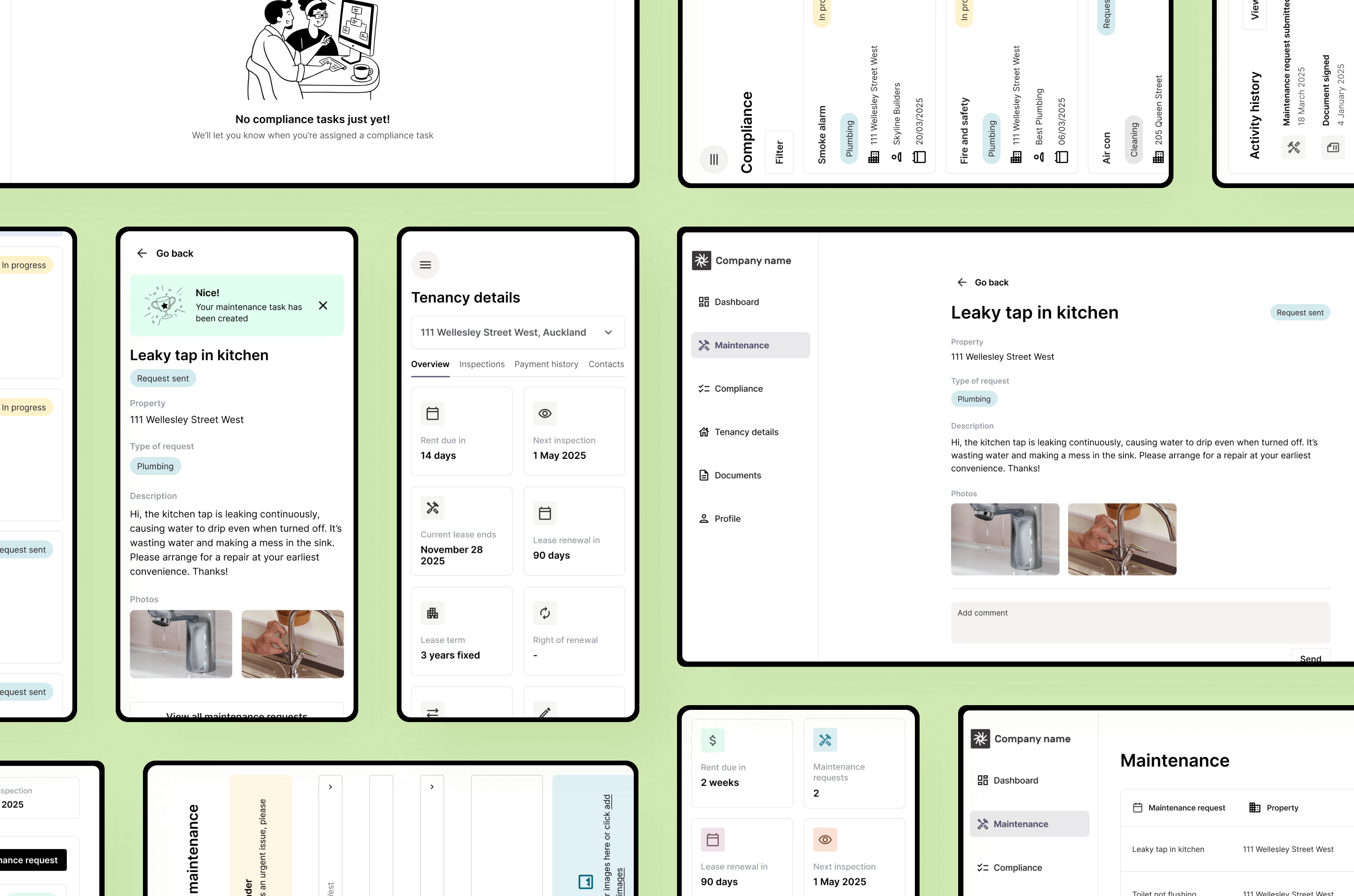
Because a tenant app already existed, it was critical that the web portal didn't take away features tenants already relied on. I audited the existing app to understand which features were actively used, which were critical, and what had to be included to establish a strong baseline. We aimed to match the app in functionality to hit feature parity, delivering key flows such as the following:
- Logging maintenance requests
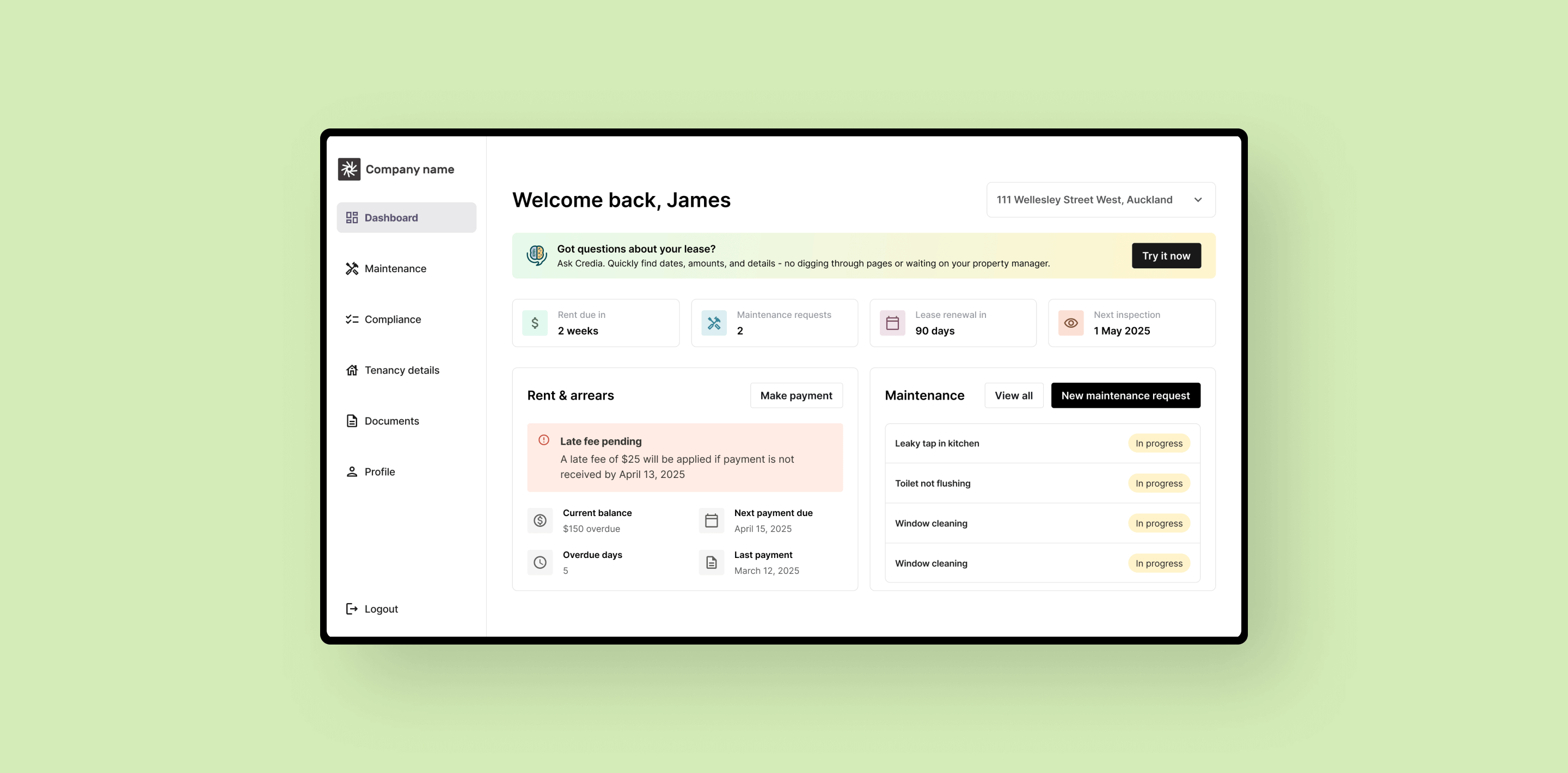
- Viewing and paying outstanding invoices
- Accessing tenancy, property, and contact details
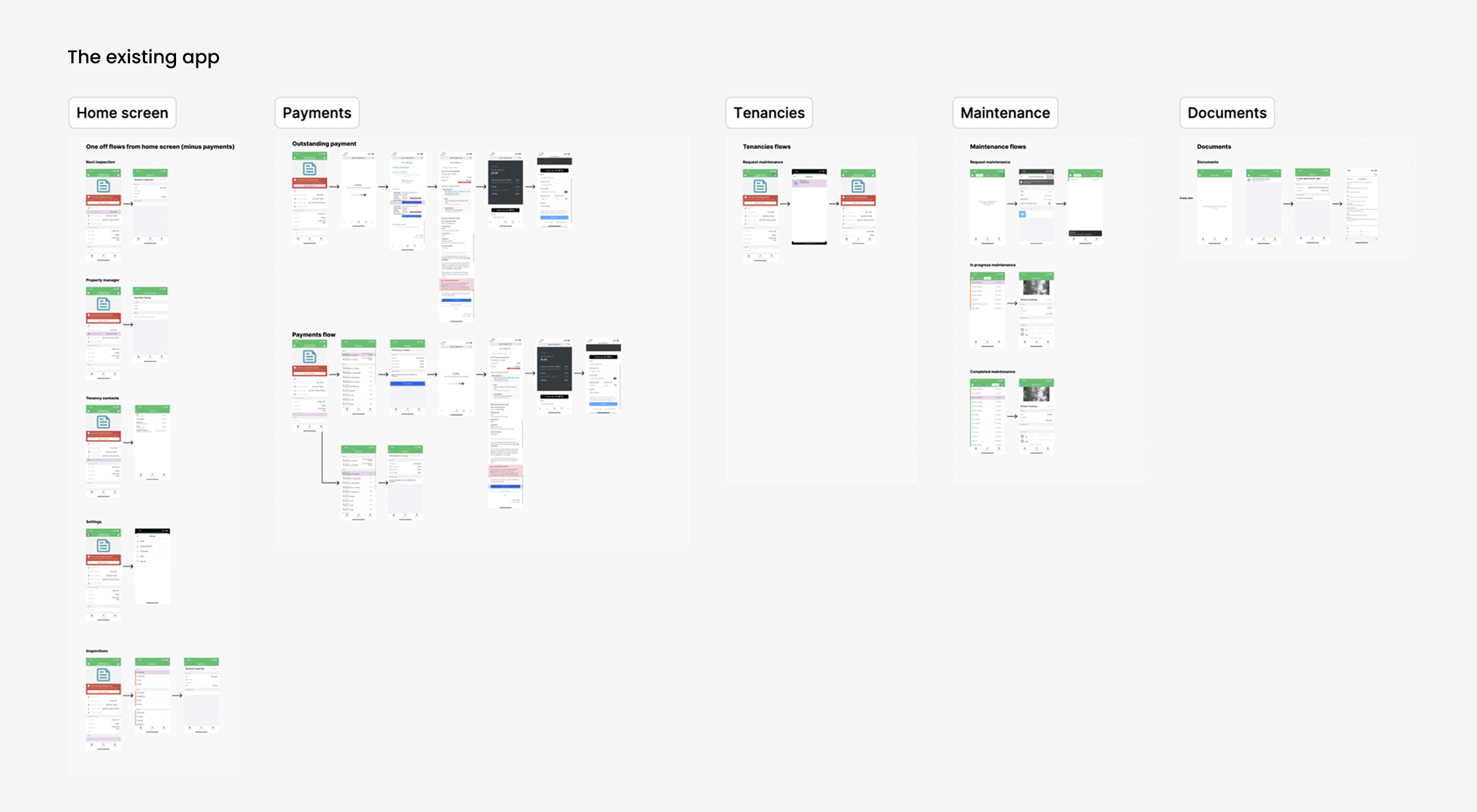
While feature parity formed the foundation of the MVP, interviews and productboard feedback (around the tenant app) also highlighted a small number of clear gaps we could address in the initial release of the portal. These included:
- Configurable tenant permissions, allowing property managers to control feature access
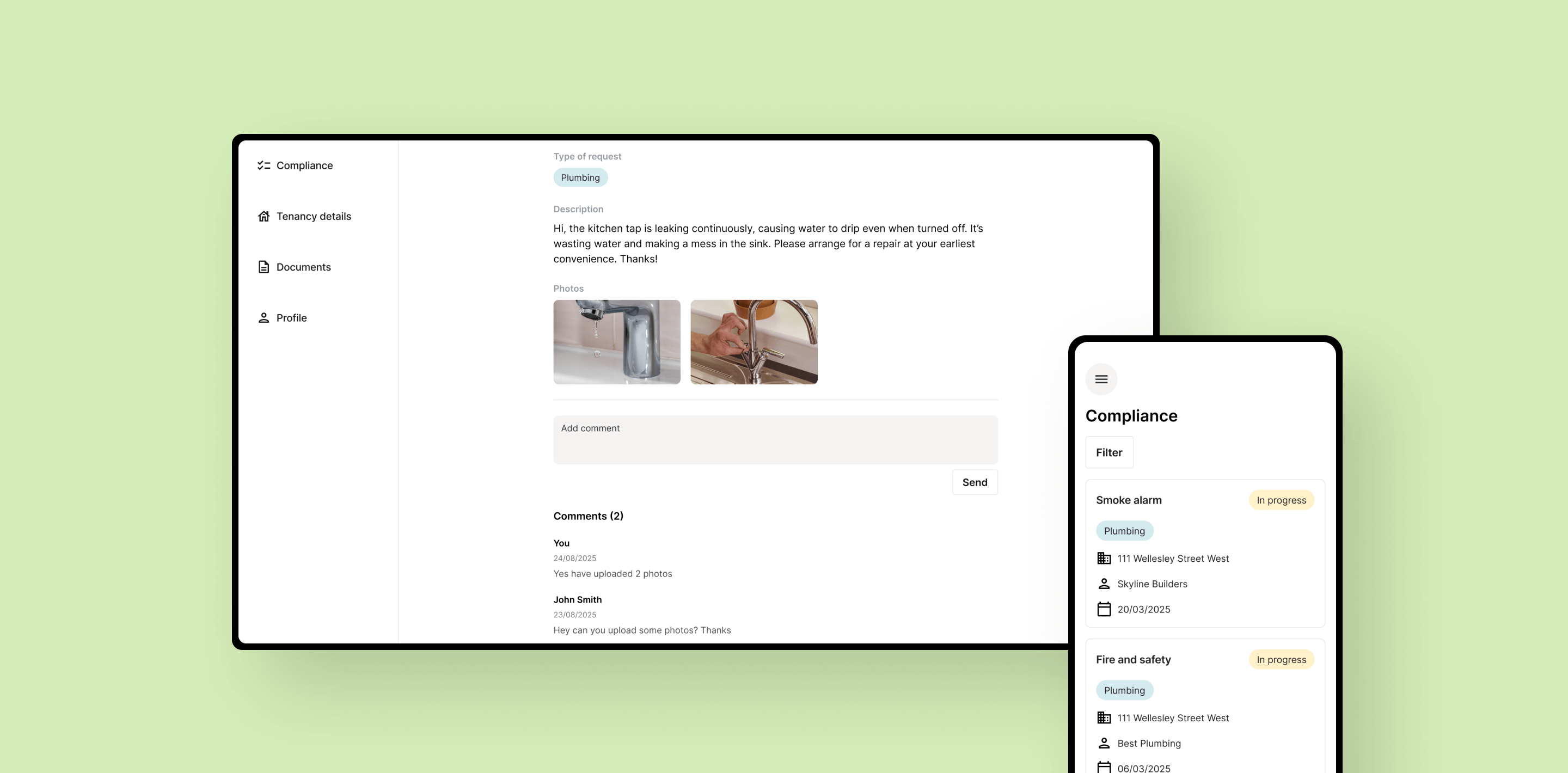
- Viewing and uploading compliance documents where tenants were responsible
- Commenting on maintenance requests to improve communication and reduce follow-ups
- Switching between multiple properties for tenants with more than one tenancy